


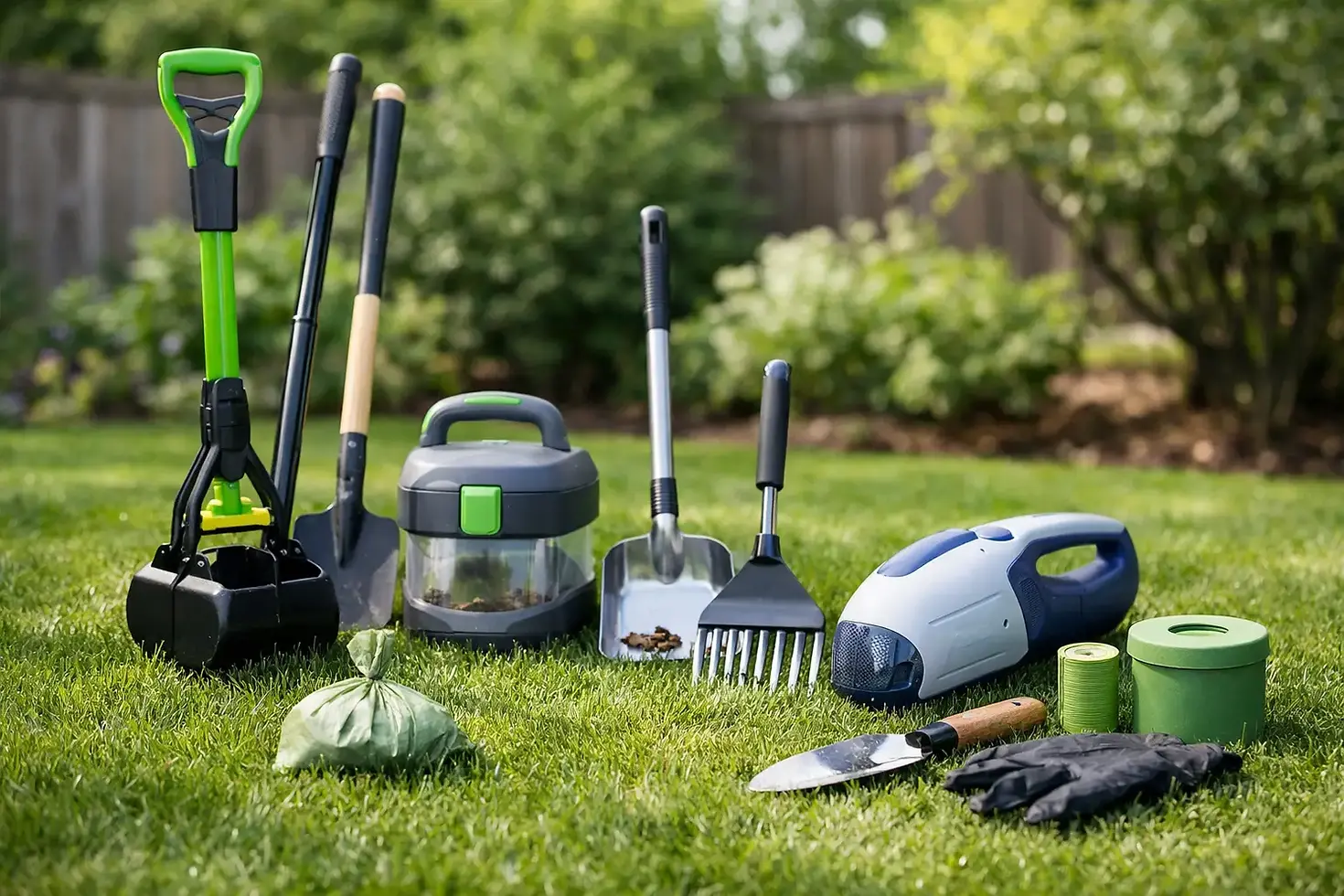
7 Yard Pooper Scooper Alternatives

Some yard cleanup tools act like they were designed by people who have never met a dog, seen a lawn, or dealt with a mystery pile hiding in the morning dew. If you’re searching for yard pooper scooper alternatives, you’re probably already over the usual routine - bend, bag, scoop, grimace, repeat.
The good news is there isn’t just one way to handle backyard business. The less-good news is that every option comes with a catch. Some are faster. Some are cleaner. Some are better for big yards, multiple dogs, or those surprise soft-serve situations nobody asked for. The trick is finding the one that fits your yard, your dog, and your tolerance for nonsense.
Why people look for yard pooper scooper alternatives
Traditional scoopers get the job done, but that doesn’t mean people love them. A lot of them are bulky, awkward to store, and weirdly bad at grabbing anything that isn’t sitting on perfectly flat ground like it posed for a catalog photo.
Then there’s the bag situation. Using poop bags by hand works fine on walks, but in a backyard it can feel slow and unnecessarily personal. If you’ve got a larger dog, multiple dogs, or a yard that becomes a minefield by day two, the standard bag-and-grab method starts to feel like a part-time job with terrible benefits.
That’s why alternatives have become more interesting. People want less bending, less fumbling, and fewer moments where a cleanup tool somehow makes the whole experience more dramatic than it needed to be.
1. Rake and pan systems
This is the classic backyard setup for a reason. A rake and pan system gives you a little distance, covers decent ground, and usually works well for firm waste on grass, gravel, or dirt. If your dog has a predictable schedule and your yard isn’t massive, this can be a solid no-frills option.
The downside is speed. It’s not exactly one-motion cleanup, and soft waste can turn the rake into a regret machine. You also have to clean the tool itself, which feels like an unfair sequel to the original chore.
For people who like simple gear and don’t mind a little extra handling, rake and pan systems still have a place. They just aren’t always the quickest answer.
2. Long-handle claw scoopers
These are the grab-and-release tools with spring-loaded jaws. They appeal to people who want less bending and a more direct pickup method. On paper, they sound great. In real life, they can be hit or miss.
When the waste is firm and the lawn is short, claw scoopers can work pretty well. When the grass is thick, the ground is uneven, or the pile is softer than expected, things get less elegant. You may end up pinching at the yard more than the target, which is not a proud moment for anybody.
They’re better for occasional cleanup than high-volume yard patrol. If you’ve got one dog and stay on top of things daily, they can do the trick.
3. Bag-over-hand pickup
This is the old reliable. Turn the bag inside out over your hand, pick up the waste, flip the bag, tie it off, and move on with your life. It’s cheap, easy, and doesn’t require another tool taking up garage space next to the mystery extension cord bin.
Still, as yard pooper scooper alternatives go, this is the most hands-on of the bunch. Some people don’t care. Others would rather not feel quite so spiritually connected to the task. It also gets annoying fast if you have a big yard or several pickups to handle at once.
For quick spot cleanup, it works. For larger-scale backyard management, it can feel like using a teaspoon to bail out a canoe.
4. Flushable pickup methods
Some dog owners use flushable waste bags or scoop-and-flush systems, especially when they want to skip the outdoor trash can smell. This approach can be convenient in smaller households and can cut down on the lingering bouquet coming from the bin in July.
But this one depends heavily on your local plumbing, wastewater rules, and how much effort you want to spend researching what your pipes will tolerate. Not every flushable product is equally sewer-friendly, and not every home setup is thrilled about processing dog waste.
It can be a smart option in the right situation, but it’s not the universal fix people hope it is. If you want easy, this may or may not qualify.
5. In-ground pet waste digesters
A digester is basically a dedicated disposal system installed in your yard. You drop waste in, add water or treatment tablets, and let the system break things down over time. For some homeowners, especially those with larger properties, this can be a tidy long-term setup.
The catch is commitment. You have to install it, place it carefully, and maintain it. It also works better in some climates and soil conditions than others. Frozen ground and poor drainage can turn this from clever solution to backyard science project.
If you want a permanent system and don’t mind setup, digesters can make sense. If you want instant simplicity, they’re probably more project than payoff.
6. Disposable surface pickup tools
There are also single-use or semi-disposable tools made from cardboard, stiff paper, or lightweight plastic. These are designed to scoop waste without requiring you to wash the tool afterward. They can be handy for travel, occasional use, or people who really don’t want to deal with cleaning equipment.
The trade-off is obvious. You’re burning through more materials, and the cost can creep up if you use them regularly. They also tend to be less sturdy than reusable tools, which is a charming problem right up until it isn’t.
For backups or quick cleanups, they’re fine. As a primary system, they’re usually better in theory than in a busy dog yard.
7. Scoop-and-flick tools
Now we’re talking about a category that exists because some people are done treating dog cleanup like a ceremonial ordeal. Scoop-and-flick tools are built for quick pickup and relocation in one motion, which makes them a different animal from the bag-only or clamp-style options.
This approach works best when you have an appropriate area to relocate waste and you want speed over fuss. It cuts down on direct contact, avoids the awkward claw grip issue, and can feel a lot more efficient for open yards or edge-of-property cleanup. It also has a certain comic satisfaction that standard scoopers simply do not deliver.
Of course, this method is not for every yard. If you have a tiny urban patch of grass, close neighbors, or strict cleanup rules about immediate bagging and disposal, a relocation-style tool may not be your best fit. But for homeowners with space, it can be one of the fastest alternatives out there. Poo Flicker leans hard into this lane for a reason - it turns a gross chore into a quick move and gets you back to your day.
How to choose between yard pooper scooper alternatives
The right choice depends less on what looks clever online and more on what your yard throws at you every week. Start with the ground itself. Thick grass, gravel, dirt, and sloped terrain all change how well a tool performs. The perfect scooper for a flat suburban lawn can fall apart fast in a rougher backyard.
Then think about volume. One small dog is one thing. Three large dogs with full weekend freedom is another. High-volume cleanup usually rewards speed and low-maintenance tools. If you need to stop and rinse, untangle, or re-bag every few minutes, you’ll feel it.
You should also be honest about your own habits. If you clean daily, simpler tools can work because nothing has time to get truly offensive. If you tend to do one big cleanup pass every few days, you need something that handles variety - firm piles, soft piles, hidden piles, and the one that somehow merged with the grass like a tactical operation.
What matters more than the marketing
Every pet waste tool claims to be easy. Easy is a slippery word. Easy to store is not the same as easy to use. Easy in dry weather is not the same as easy after rain. And easy for one neat little dog is not always easy for a 90-pound chaos machine with digestive opinions.
Look for the stuff that affects real use. Does it save bending? Does it work on your surface? Does it need cleanup after cleanup? Does it help you move faster, or just make the process look more official?
That’s the real test. A fancy design means nothing if it turns a two-minute job into a backyard negotiation.
The best alternative is the one you’ll actually use
Some people want the cleanest disposal method possible. Some want the fastest. Some just want to stop dreading the yard patrol after dinner. All of those are valid.
The best yard pooper scooper alternatives are the ones that match your space and your patience level. If a tool makes cleanup quicker, simpler, and just a little less annoying, it’s doing its job. And if it makes you laugh while handling a chore nobody brags about, that’s not silly - that’s good design.


Comments